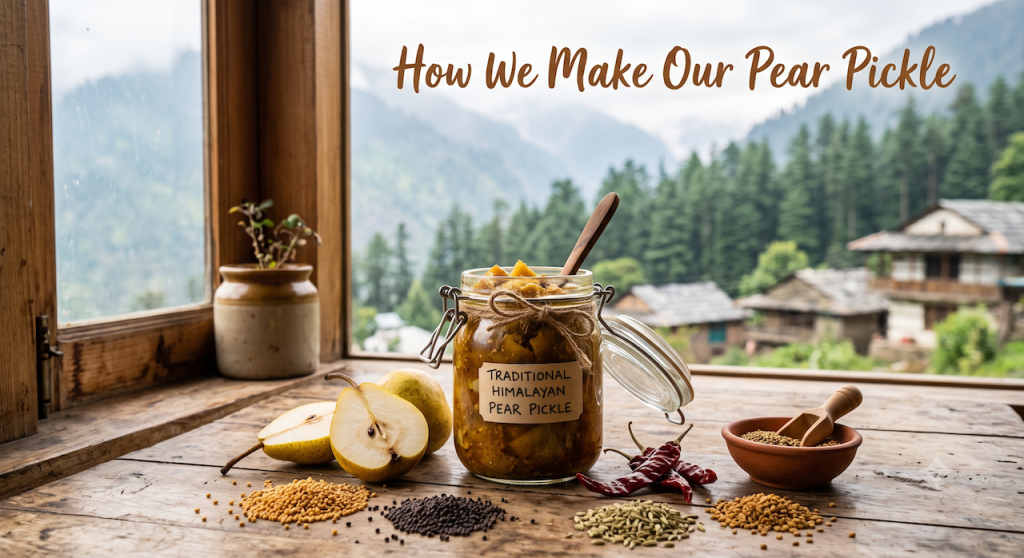
How We Make Our Lingri Pickle
Crafted in Kullu, Himachal Pradesh
High up in the forests around Kullu, when the snow melts and spring arrives, a small window opens — barely a few weeks long — when the Lingri, our wild Himalayan fiddlehead fern, is ready to be picked. This is where our Lingri Pickle begins.
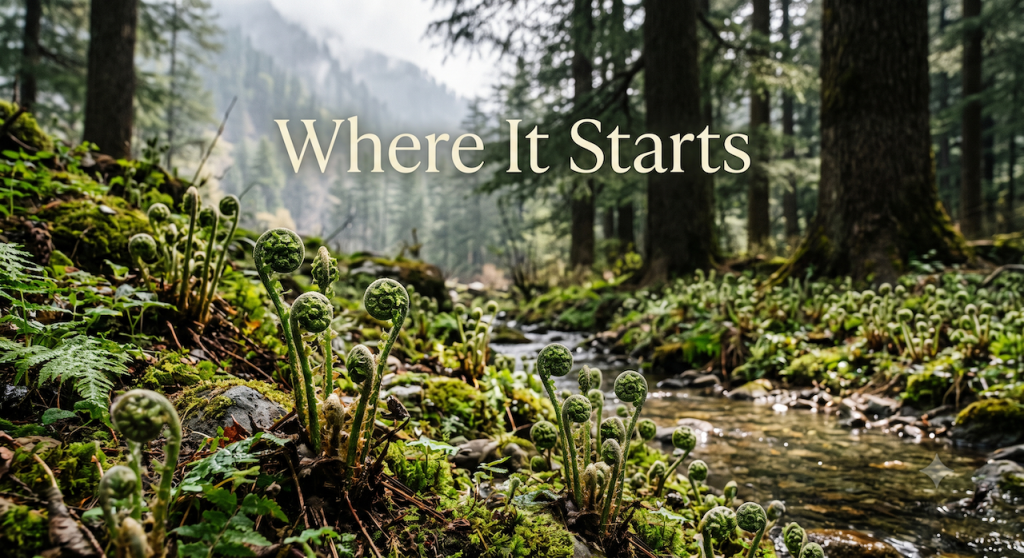
Where It Starts
Lingri doesn’t grow on a farm. It grows wild, high in the forests around Kullu — thriving in the shaded, moist hillsides at altitudes of 5,000 feet and above, tucked along mountain streams where the air stays cool even in spring. It has to be gathered by hand, at just the right stage — young, tender, and tightly coiled — before it opens up and turns too fibrous to eat. Once the season passes, that’s it for the year. This short window, combined with where it grows, is part of what makes Lingri so special in the hills, and part of why it isn’t something you’ll find in most kitchens outside Himachal.
The Process
Once the Lingri is gathered, it goes through a careful process passed down in our family. Every fern is first cleaned and washed thoroughly to remove any forest debris and dust, then cut into small pieces. Importantly, the head part is removed and not used — many people mistakenly add the head to their pickle, but in the traditional Kullu way, only the stalk goes in, and the head is left out.
The cut pieces are then boiled to soften them and bring out their earthy, nutty flavor, before being laid out and sun-dried the traditional way. Once dried, the Lingri is mixed by hand with mustard oil, mustard seeds, red chili, and Himalayan spices, and finally left to preserve and mature slowly — the way it’s always been done, with no shortcuts.
No mass production — just small batches, made the traditional Kullu way.
Why It’s Different
Lingri Pickle isn’t something you’ll find on most pickle shelves. It’s a forgotten hill delicacy — foraged, not farmed, gathered from altitudes where few crops grow, and available only for a short window each year. When you get a jar of ours, you’re getting a taste of the Himalayan forest itself, made the way our family always has.